
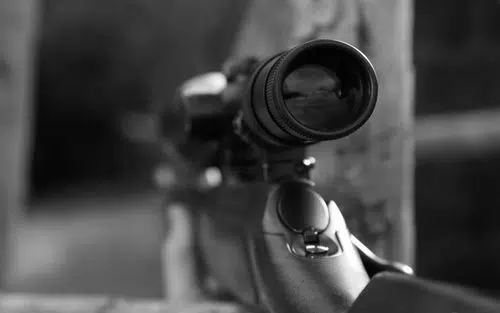
I’m an indoorsman, alright? I don’t have an intimate understanding of how it truly feels to get that thirty point buck. But I’m in the minority. Deer hunting opener is basically a state-recognized holiday in North Dakota. And, because of this, I want to take a moment to give hope to a few of my fellow North Dakotans who aren’t able to join their friends and family out in the field at the beginning of November.
Why Some North Dakotans are Denied a Firearm Even After Serving their Time
These people have likely at some point been convicted of a felony offense or a domestic violence crime. They have already done their time, have remained law-abiding, and should have had their firearm rights automatically restored. But, waiting with bated breath at their local gun shop, they get told that they have been denied a firearm. This is because, on occasion, their criminal history report will still reflect that they are a prohibited person, even though it shouldn’t. So, what next? Are they out of luck to get that big buck? Fortunately, North Dakota has a procedure to restore an individual’s firearm rights.
Who is a Prohibited Person Under North Dakota Law?
First, it is important to understand how an individual becomes a prohibited person, and for how long.
The 10-Year Firearm Ban: Which Felony Offenses Trigger It
In North Dakota, a person who has been convicted anywhere of a felony offense involving violence or intimidation is prohibited from owning a firearm or having one in their possession for a period of ten (10) years from the date of their conviction or the date of their release from incarceration, parole, or probation, whichever is latest. Offenses triggering this ten year period are found under North Dakota Century Code §§ 12.1-16 through 12.1-25 and include murder, robbery, aggravated assault, terrorizing, and the list goes on.
When a 5-Year Ban Applies Instead
If an individual has been convicted anywhere of any other felony offense not included in the ten-year prohibition, or a Class A Misdemeanor in North Dakota involving violence or intimidation (or equivalent offense in another state) and a firearm, dangerous weapon, or destructive device was used in the commission of the Class A Misdemeanor, they are prohibited from owning or possessing a firearm for a five year period. The standard for when the five-year period begins is the same as with the felony violent crime.
Federal Prohibitions on Firearm Possession You Also Need to Know
Additionally, federal law prohibits individuals from possessing firearms if they have been convicted of a misdemeanor crime of violence, or have had a domestic violence restraining order against them. A misdemeanor crime of violence is defined here under 18 U.S.C. § 921(a)(33). Finally, if you have ever been diagnosed and confined or committed to a mental disability, you likely are not allowed to possess a firearm. However, this does not apply to people who have not suffered from the disability for the previous three years and have successfully petitioned for the restoration of their firearm rights.
How to File a Petition to Restore Your Firearm Rights in North Dakota
Once the appropriate period has passed, your rights should automatically be restored. If they are not for whatever reason, or if it was a domestic violence offense, you will need to get a court order restoring your firearm rights.
Where to File and How the Process Works
This can be done by filing a Petition for Restoration of Firearm Rights in either 1) the county where the offense occurred if it was in North Dakota, or 2) in the county of your residence in North Dakota if the offense occurred outside of the state. A copy of the petition must be served on the State’s Attorney’s office in the appropriate county. The State of North Dakota, through the State’s Attorney’s Office in that particular county, then has twenty days to respond to your petition. After that period, a hearing may be set up, or the Court may make a decision without a hearing.
The Four Things a Judge Must Find Before Restoring Your Gun Rights
Inevitably, a judge may restore a person’s right to possess a firearm if they determine by clear and convincing evidence that that the person has 1) paid all fines imposed for the violation; 2) served all of the terms of imprisonment imposed for the violation; 3) successfully completed all conditions of probation or parole imposed for the violation; and 4) the Court has determined that the individual’s record and reputation are such that the individual is not likely to act in a manner dangerous to the safety of others.
What “Clear and Convincing Evidence” Actually Means for Your Case
What does that mean? Basically, you have to show that you have done everything that the Court ordered you to do as a result of the offense in question, have remained law-abiding, and there is no evidence that you are likely a risk to the safety of any other person. For a lot of people who made one bad mistake, this is very doable. However, that does not mean that it is simply a rubber stamp by the Court.
Facing a Charge That Could Cost You Your Firearm Rights? Act Now.
Finally, if you are currently facing a crime that would prohibit you from possessing a firearm, the best step is to seek legal advice on the ramifications of a conviction or guilty plea to the charge and/or a guilty plea to an amended charge. Being proactive does not necessarily mean that you will not lose your firearm rights. But, it is much easier to solve a problem the first time as opposed to cleaning up the mess afterward.
Talk to SW&L’s Criminal Defense Team About Restoring Your Gun Rights
If you have a criminal issue or would like to discuss getting your or your loved ones’ firearm rights restored, please do not hesitate to call our Criminal Defense Team in Fargo at 701-297-2890.
This blog post is general information regarding this issue and is not intended to be an in-depth review of this rather complex legal issue.